We plan Gujarat tours for a living. Between our office, our drivers and the local guides we work with, we have run every road in this guide more times in a single winter than most travellers drive in a year — and every season the same question lands in our inbox from first-time visitors: should I take the 3-day, the 5-day or the 8-day Gujarat tour?
The honest answer is that all three are the right answer, for different travellers. What changes between them is not the quality of the trip but which Gujarat you actually see. In three days you can stand on the White Rann under a full moon, or complete the Dwarka-Somnath temple run — but not both. In five you can walk the Saurashtra temple axis and still spend a morning with wild Asiatic lions. In eight you get the full classic circuit: the trip we would run ourselves.
This guide lays out the same comparison we walk clients through — what genuinely fits into 3, 5 and 8 days, day-by-day sample plans, what each length costs in the 2026-27 season, and the calendar dates that should drive your decision.
The Quick Answer
If you are planning in a hurry, here is the short version. Three days in Gujarat is enough for one region done properly — the White Rann and Bhuj between November and February, the Dwarka-Somnath temple circuit, or Ahmedabad with the Statue of Unity. Five days is the sweet spot for most first-time visitors: Dwarka, Somnath and Sasan Gir at a comfortable pace, covering two of the twelve Jyotirlingas, the Char Dham shrine at Dwarka, and the only wild Asiatic lions on earth. Eight days is the full classic circuit — Ahmedabad, Kutch, Gir, Somnath and Dwarka on one loop.
The rule of thumb we use with clients: match your days to your must-see, never the other way round. If the White Rann is non-negotiable and you only have three days, spend all three in Kutch rather than covering two regions in a blur of highway.
At a glance: which trip length fits which traveller
Choose 3 days if...
Choose 5 days if...
Choose 8 days if...
You have a long weekend plus a day of leave, you are focused on a single experience (the Rann, the temples, or the Statue of Unity), or you are a repeat visitor filling a gap.
This is your first Gujarat trip, you travel with children or elderly parents, or temples plus wildlife matter more to you than the salt desert.
This is likely to be your only Gujarat trip, the White Rann and the lions both matter, and you can absorb two long transfer days.
Why Trip Length Matters More in Gujarat Than Almost Anywhere Else
Gujarat is enormous — close to 196,000 square kilometres, bigger than many countries — and its headline attractions sit in three separate corners of the map. This geography, more than anything else, decides what a tour of any length can achieve.
Cluster one is Kutch, in the far west: Bhuj, the White Rann at Dhordo, Mandvi with its palace and beach, the craft villages, and the Harappan city of Dholavira. Cluster two is Saurashtra, the peninsula that forms the state's lower half: Dwarka and Somnath at either end, Sasan Gir and Junagadh at its heart, Rajkot as the hub, with Diu and Palitana on the edges. Cluster three is the central belt: Ahmedabad — India's first UNESCO World Heritage City — Gandhinagar's Akshardham, the Statue of Unity at Kevadia, and the Modhera-Patan day-trip pair.
The catch is the distance between them. Ahmedabad to the White Rann is a 420-kilometre, eight-hour door-to-door run. Dwarka sits about 450 kilometres from Ahmedabad by road. Bhuj to Sasan Gir is roughly 400 kilometres. Every hop between clusters costs the better part of a day, and no amount of early starts changes that. First-time planners see Kutch and Dwarka a few centimetres apart on a map and book both into a weekend; our drivers have spent years gently unpicking those itineraries over the phone.
Road distances and realistic drive times (private car, Nov-Feb)
Route
Road distance
Realistic drive time
Ahmedabad to Bhuj
335 km
7 hours
Bhuj to Dhordo (White Rann)
85 km
2 hours
Ahmedabad to Rajkot
215 km
4 hours
Rajkot to Sasan Gir
160 km
3.5 hours
Sasan Gir to Somnath
50 km
1 hour
Somnath to Dwarka (via Porbandar)
230 km
5 to 6 hours with a Porbandar stop
Dwarka to Ahmedabad
440 km
9 hours (or 8 hours by train)
Ahmedabad to Kevadia (Statue of Unity)
200 km
4 hours via Vadodara
Ahmedabad to Modhera / Patan
100-125 km
3 hours
Distances and times are road estimates our drivers work with in the November-February season.
A planning number that has served us well: keep any Gujarat day under about 250 kilometres of driving and the trip stays a holiday. Push past 300 and you start reaching temples and safari gates tired — and Gujarat's marquee experiences are almost all early-morning commitments: the 6:30 AM safari slot at Gir, the morning darshan at Dwarkadhish, sunrise over the Great Rann from Kalo Dungar.
3-Day Gujarat Tours: What Works and What Does Not
Three days works in Gujarat when you commit to one cluster. Attempted honestly, it is a genuinely satisfying trip — the White Rann under a full moon is a two-day experience that rivals anything in India. Attempted greedily, it becomes a thousand kilometres of windshield time. Here is what fits, and what does not.
Three solid options exist:
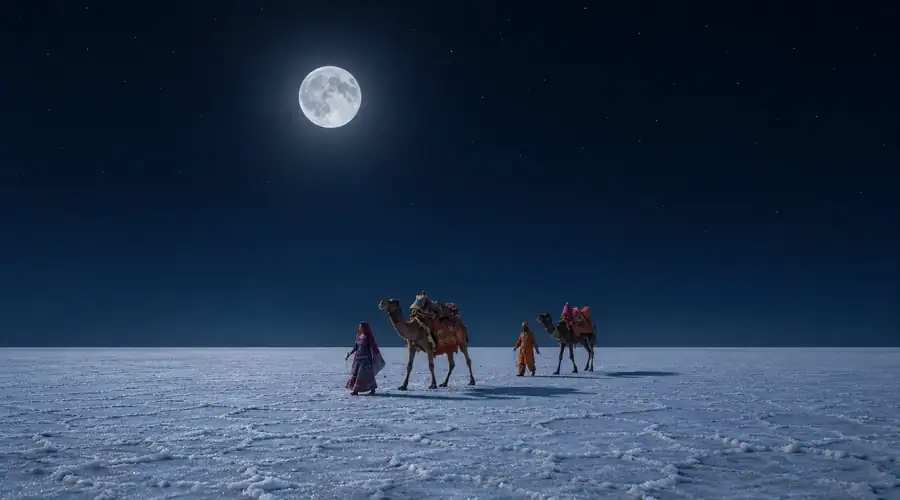
Option A, our pick for November to February: Kutch and the White Rann.
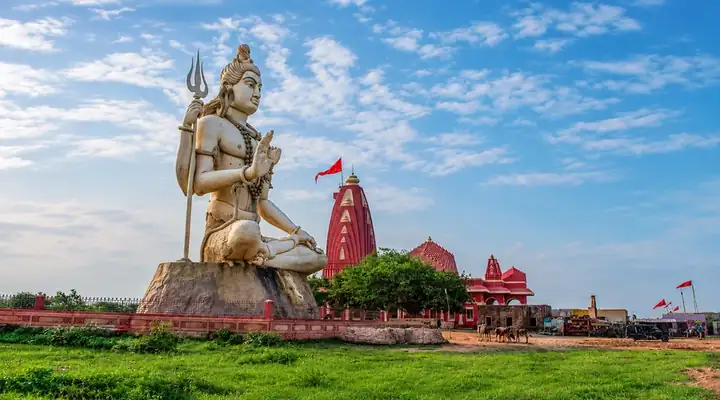
Option B: the Dwarka-Somnath temple run, which works in any season.
Option C: Ahmedabad and the Statue of Unity — the gentlest introduction to the state, and the best of the three with young children.
Option A: Kutch and the White Rann (the one we would run)
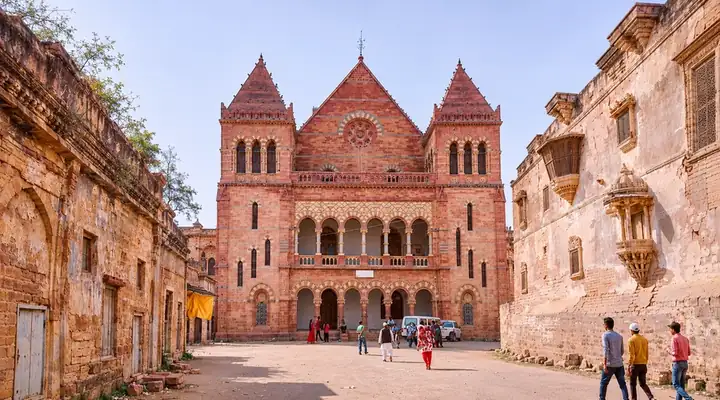
Day 1Arrive Bhuj: Aaina Mahal, Prag Mahal and Smritivan
Arrive Bhuj on the overnight train from Ahmedabad or the Alliance Air flight from Mumbai (about 1 hour 45 minutes). Morning: Aaina Mahal, Prag Mahal and the Smritivan earthquake memorial museum. Afternoon: the weaving village of Bhujodi, or take a Tent City pickup to Dhordo (fixed departures from Bhuj through the day).
Overnight: Bhuj or the Tent City, Dhordo
Day 2Kalo Dungar sunrise and the White Rann
Sunrise at Kalo Dungar, the Black Hill and Kutch's highest point, looking out over the Great Rann; Gandhi nu Gaam artisan village on the way back. Afternoon: the permit checkpoint at Dhordo, then sunset and — if you have timed it — a full-moon night on the White Rann. Cultural programme after dinner at the Tent City.
Overnight: Tent City, Dhordo
Day 3Mandvi or the craft villages, then home
Morning: Vijay Vilas Palace and the beach at Mandvi (about 60 km from Bhuj), or the craft villages of Ajrakhpur and Nirona (rogan art and bell-making) if you stayed in Bhuj. Evening train or flight home via Bhuj.
Overnight: Return overnight
Two details decide how good this trip is. First, the Rann Utsav at Dhordo runs from 1 November 2026 to 7 March 2027; official Tent City packages start at about Rs 6,300 per person for one night and two days, including all meals, sightseeing excursions to the White Rann, Kalo Dungar and Gandhi nu Gaam, cultural programmes, and fixed-time transfers from Bhuj railway station and airport.
Second, the White Rann is at its surreal best around full moon, when the salt floor glows silver. Budget travellers can skip the Tent City and stay in Bhuj or in the village homestays at Dhordo, buying the Rann permit separately at Rs 100 per adult — but you will want your own vehicle for the evening run to the salt flat.
Expert tip — book the moon, not just the dates. The 2026-27 full-moon windows at the White Rann are 22-25 November, 21-24 December, 20-23 January and 18-21 February. These nights sell out first at the Tent City, often two to three months ahead, and carry the season's highest tariffs.
Board an overnight train from Ahmedabad toward Okha — roughly a dozen trains do the eight-hour run — and alight at Dwarka on the morning of day one. Or fly to Ahmedabad and we can give you a car to Dwarka (about 450 km, a 9-hour drive), or fly to Rajkot and take a car from there (about 250 km, a 4-hour drive).
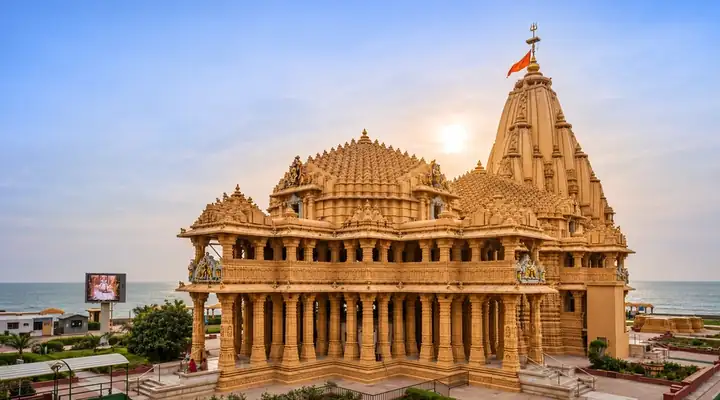
Spend the day between the Dwarkadhish temple (darshan 6:30 AM to 1:00 PM and 5:00 to 9:30 PM), Gomti Ghat and the Nageshwar Jyotirlinga nearby. On day two, cross to Bet Dwarka from Okha by the Sudarshan Setu bridge (or the boat), then drive the 230 kilometres to Somnath, halting at Kirti Mandir in Porbandar, the birthplace of Mahatma Gandhi. Day three: the 7:00 AM aarti at Somnath, Bhalka Tirth where Krishna is believed to have ended his earthly journey, and a day or overnight train back to Ahmedabad. It is a dense, moving 72 hours — both temples stand among the most significant in Hinduism, and the coastal road between them is lovely.
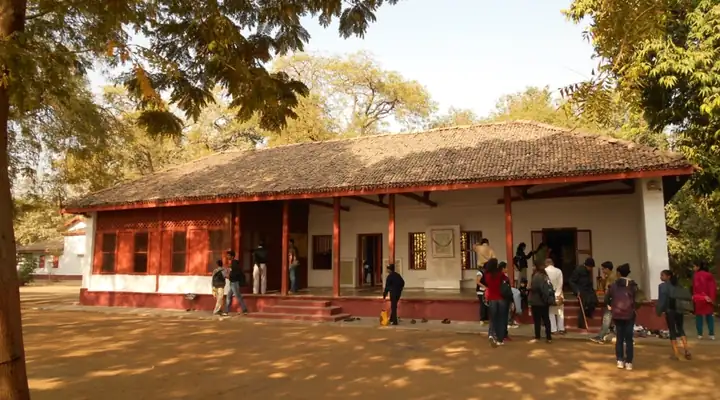
Day one, walk the pols of the old city on the morning heritage walk, spend the afternoon at Sabarmati Ashram and the Adalaj stepwell, and eat your way through Manek Chowk after dark. Day two, drive the four hours to Kevadia for the Statue of Unity — at 182 metres, the world's tallest statue — with a viewing-gallery ticket (entry Rs 150; viewing gallery Rs 380; express entry Rs 1,030) and the evening laser show, which begins around 7 PM. Day three, loop back through the Modhera Sun Temple and Rani ki Vav at Patan, a UNESCO World Heritage stepwell. One warning that catches planners every year: the Statue of Unity complex and Akshardham are both closed on Mondays.
The mistakes we see most often in 3-day plans: combining Kutch with Saurashtra, which are a full day's drive apart in each direction; underestimating the Dwarka-Somnath leg; and assuming Gir can be squeezed in from Ahmedabad — it cannot, unless lions are the only thing you do. And anchor your days around the Monday closures before you book anything else.
5-Day Gujarat Tours: The Temples-and-Lions Sweet Spot
Five days is the length we arrange most often, and the reason is simple: it is the shortest trip that delivers Saurashtra's holy trinity — Dwarka, Somnath and the lions of Gir — without punishing road days. Once you are in Dwarka, total driving hovers around 550-600 kilometres spread across five days, gentle by Gujarat standards.
The plan below starts with an overnight train from Ahmedabad on the night before day one, which buys you a full first day in Dwarka. If you would rather drive, a private car covers Ahmedabad to Dwarka in eight to nine hours — a wasted day, in our view, when the train does it while you sleep.
Day 1Dwarka: Dwarkadhish darshan and Gomti Ghat aarti
Arrive in Ahmedabad or Rajkot, or directly in Dwarka in the morning by overnight train; check in and rest. Afternoon darshan at the Dwarkadhish temple, the evening Gomti Ghat aarti and sunset over the Arabian Sea.
Overnight: Dwarka
Day 2Bet Dwarka, Nageshwar, then on to Somnath
Early-morning darshan at Dwarkadhish; Bet Dwarka across the Sudarshan Setu bridge (or by boat from Okha); Nageshwar Jyotirlinga and the Rukmini temple. Afternoon drive to Somnath via Porbandar (230 km), stopping at Kirti Mandir. Evening: the 7:00 PM aarti and the light-and-sound show at 8 PM.
Overnight: Somnath
Day 3Somnath darshan and Sasan Gir
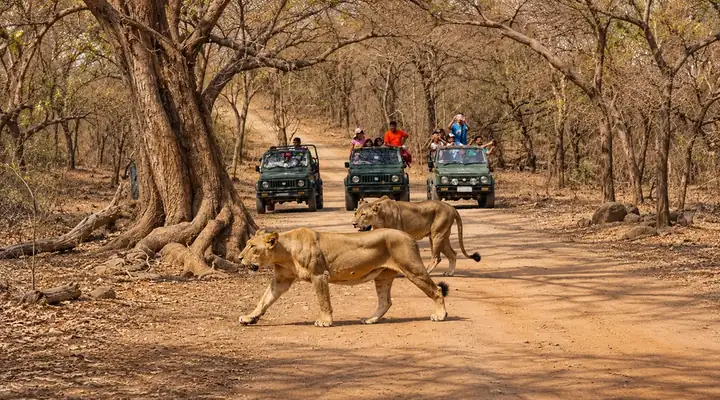
Morning darshan at Somnath and a visit to Bhalka Tirth. The short 50 km hop to Sasan Gir after lunch; evening jungle safari in the 3:00-6:00 PM winter slot if permits are available, otherwise the Devalia interpretation zone.
Overnight: Sasan Gir
Day 4Gir morning safari and Junagadh
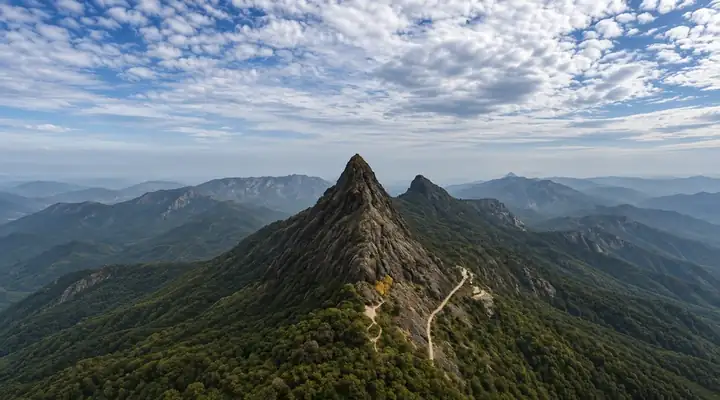
The 6:30-9:30 AM safari slot — the best light and the liveliest cats. After brunch: a second safari, a slow resort afternoon, or the drive to Junagadh (Uparkot fort, the Girnar hills) and on to Rajkot.
Overnight: Sasan Gir or Rajkot
Day 5Ahmedabad and fly home
Morning drive to Ahmedabad; the riverfront, a heritage walk or last-minute shopping before the flight home.
Overnight: Return
Two operational details make or break this itinerary. Book the Gir safari permit the day bookings open: the forest department's official portal is the only legitimate channel, permits cost Rs 800 per jeep on weekdays and Rs 1,000 on weekends and festival days for up to six persons, with the gypsy (Rs 2,500-4,500 per vehicle) and the guide (Rs 400-700) paid separately at Sasan. Split six ways, a full jeep works out to roughly Rs 800-850 a head. Second, if your five days fall between 16 June and 15 October, the Gir safari is closed for the monsoon — swap Gir for Diu, the old Portuguese island town about 80 kilometres from Somnath, and keep everything else.
Expert tip — the Gir permit is priced per jeep, not per person, and there is no tatkal quota. Book only on the official forest department portal; it expressly warns against third-party sites selling confirmed permits at a premium.
The other five-day plan we are asked about — Kutch plus Gir — does work, but with a caveat we always give: days one to three in Bhuj and the White Rann, day four is the 400-kilometre transfer to Sasan, day five is the safari and the dash home. You spend one of your five days entirely on the road and you skip Dwarka. We recommend it only to travellers who have already done the temple circuit on an earlier trip.
Who the five-day suits best: first-time visitors with about a week of leave, pilgrims who want both Jyotirlingas and the Char Dham shrine at Dwarka, and families — the drives are short, the hotels are good, and children handle the shorter Devalia safari far better than a three-hour jungle trail.
Eight days is the full classic circuit — the itinerary that puts every marquee name on one loop: Ahmedabad, the White Rann, Gir, Somnath and Dwarka. It is the trip we would run ourselves, and the one most worth planning properly, because it contains the two long transfers that shorter plans pretend do not exist.
The loop below uses trains at both ends and a private cab in the middle, which is how we run it for most guests. Total driving is about 1,600 kilometres across the week, with two hard days on the road.
Day 1Ahmedabad heritage walk and Sabarmati Ashram
Arrive Ahmedabad by morning flight or train. Old-city heritage walk, Sabarmati Ashram, Adalaj stepwell; dinner and the night market at Manek Chowk. Board the overnight train to Bhuj.
Overnight: Overnight train
Day 2Bhuj palaces and the craft villages
Arrive Bhuj early. Aaina Mahal, Prag Mahal and Smritivan; afternoon among the craft villages — Bhujodi weaving, Ajrakhpur ajrakh printing, Nirona rogan art. Drive to Dhordo in the evening or stay in Bhuj.
Overnight: Bhuj or Tent City
Day 3The White Rann and Kalo Dungar
The Kutch day: sunrise at Kalo Dungar, Gandhi nu Gaam, and the afternoon and sunset on the White Rann — timed, if you possibly can, to a full-moon window. Cultural programme in the evening.
Overnight: Tent City, Dhordo
Day 4The long transfer: Bhuj to Sasan Gir
The honest cost of the full circuit: the 400 km transfer from Bhuj to Sasan Gir, eight to nine hours with stops. Leave by 7 AM, break for lunch at Rajkot, and pass the Girnar hills near Junagadh before a late dinner.
Overnight: Sasan Gir
Day 5Gir safari, then Somnath
The 6:30 AM safari slot in Gir. After brunch, the short drive to Somnath (50 km); the evening aarti and the light-and-sound show.
Overnight: Somnath
Day 6Somnath to Dwarka via Porbandar
Morning darshan at Somnath and Bhalka Tirth; the 230 km drive to Dwarka via Porbandar and Kirti Mandir. Sunset at Gomti Ghat.
Overnight: Dwarka
Day 7Dwarkadhish, Bet Dwarka and Nageshwar
Early darshan at Dwarkadhish; Bet Dwarka (by the Sudarshan Setu bridge or the boat) and Nageshwar Jyotirlinga, plus other local sightseeing.
Overnight: Dwarka
Day 8Drive to Ahmedabad or Rajkot for home
After breakfast, drive from Dwarka to Ahmedabad or Rajkot for your flight or train home.
Overnight: Return
We run this 8-day circuit in two versions. Version A is the loop above, with Kutch and the White Rann. Version B swaps the Kutch leg for Ahmedabad and the Statue of Unity, which is shorter driving and suits repeat visitors who have already seen the Rann. One day short? Our 7-day Saurashtra packages cover Dwarka, Somnath, Gir and Diu fully but leave out Kutch — see the price table below.
Expert tip — plan the week around two anchors: land the White Rann day (day 3 here) inside a full-moon window, and book the Gir safari permit the day bookings open. Everything else on the circuit can be arranged around those two fixed points.
Day four is the price of the full circuit, and we would rather tell you that up front than after you have booked. Bhuj to Sasan is 400-odd kilometres; leaving by seven with a Rajkot lunch stop gets you in by dinner. Travellers who would rather not pay that price should read the variations below — or accept that the eight-day circuit is really an 8-day trip with the last night on a train.
Three variations we run often. Swap the Kutch leg for the Statue of Unity: Ahmedabad to Kevadia to Rajkot to Gir to Somnath to Dwarka is shorter driving and suits repeat visitors who have already seen the Rann. Add Diu between Gir and Somnath for the sea fort and beaches, trading an afternoon in Dwarka. And for pilgrim groups, Palitana — the 863-temple marble ascent of Shatrunjaya hill — can replace the Junagadh halt, routed through Bhavnagar.
With elderly parents in the group, convert the one-night hops into two-night bases — two nights at Bhuj, two at Gir, two at Dwarka — even if it means trimming a sight. Gujarat rewards slow, early-morning sightseeing and punishes 6 AM checkout races.
The table below is the comparison in one view — the same grid we draw on a whiteboard for clients.
What changes
3 days
5 days
8 days
Regions covered
One cluster, done well
The Saurashtra axis (temples + lions)
All three: Ahmedabad, Kutch, Saurashtra
Marquee experiences
White Rann OR Dwarka + Somnath OR Statue of Unity
Dwarka, Somnath, wild Asiatic lions at Gir
White Rann + Gir + both Jyotirlinga cities
Typical total driving
300-500 km
550-600 km from Dwarka (about 1,000 km if you drive from Ahmedabad both ways)
About 1,600 km (trains at both ends)
Daily pace
Relaxed; one travel day
Moderate; short hops
Comfortable except two long transfer days
Best suited to
Focused weekend-plus trips; repeat visitors
Most first-timers; families; pilgrims
Once-in-a-lifetime first visits
Main risk
Overstuffing; Monday closures
Gir closed 16 Jun-15 Oct
Travel fatigue; full-moon alignment
Mid-range cost per person (est.)
Rs 18,000-26,000
Rs 30,000-38,000
Rs 39,000-58,000
What each trip length covers (the 3-day column assumes the Dwarka-Somnath option)
Site or experience
3 days
5 days
8 days
Dwarkadhish Temple darshan
Yes
Yes
Yes
Nageshwar Jyotirlinga
Yes
Yes
Yes
Bet Dwarka
Rushed
Yes
Yes
Somnath Jyotirlinga
Yes
Yes
Yes
Somnath light and sound show
Only if overnight
Yes
Yes
Porbandar (Kirti Mandir, Sudama)
No
Yes
Yes
Gir lion safari
No
Yes
Yes, with a second attempt possible
Diu beaches
No
Only by dropping a night
In some versions
White Rann / Kutch
Only as a standalone 3-day
No
Yes, in Version A
Rann Utsav Tent City
Only as a standalone 3-day
No
Yes, in season
Ahmedabad heritage
Only as a standalone 3-day
No
Yes (Day 1; fuller in Version B)
Statue of Unity
Only as a standalone 3-day
No
Yes, in Version B
Spare day for delays
None
None
Roughly half a day
Choose by who you are travelling as
If you are...
Pick
Why
A pilgrim doing Dwarka and Somnath darshan
3 days
Both Jyotirlingas and the Char Dham site are covered. Extra days add sightseeing you did not come for
Completing the Jyotirlinga circuit
3-4 days
Somnath and Nageshwar are the two in Gujarat. A fourth day lets you add Dwarka properly
A family with children, first visit
5 days
Gir safari is the day children remember. Five days gets it in without back-to-back long drives
Travelling with elderly parents
5 days
Same route as a 3-day but with the drives spread out and a rest afternoon in Dwarka
A wildlife traveller
5-7 days
Seven days lets you book two safari slots, which materially improves your odds of a lion sighting
A photographer or culture traveller
8 days, Version A
Kutch's craft villages and the White Rann are the visual payoff and need two unhurried days
A first-time visitor who wants "all of Gujarat"
7-8 days minimum
Below seven you are choosing a theme, not seeing the state
Travelling specifically for Rann Utsav
3 days Kutch-only, or 8 days
A Kutch-only short trip beats stretching a Saurashtra itinerary to reach Dhordo
Arriving and departing from Ahmedabad
Add one day to any of the above
The Ahmedabad-Dwarka leg is 8-9 hours each way and consumes a day at both ends
Cost Compared: What Each Duration Is Priced At
The figures below are our published per-person rates on double-sharing occupancy for private-car tours, taken from our current package pages. They are starting rates. Final cost depends on hotel category, vehicle type, group size, travel dates and whether Rann Utsav Tent City nights are included.
Best Time to Go: The Dates That Should Drive Your Decision
In Gujarat, the calendar is not a footnote — two of the three clusters have hard seasonal boundaries. The White Rann season and the Gir safari season overlap only from late October to mid-June, and the sweet spot is narrower still.
The Gujarat travel calendar, 2026-27
Window
What it means on the ground
Best for
1 Nov 2026 - 7 Mar 2027 (Rann Utsav)
The White Rann season proper. The Diwali fortnight (8-14 Nov in 2026) is festive but crowded and premium-priced. Full-moon windows: 22-25 Nov, 21-24 Dec, 20-23 Jan, 18-21 Feb.
Every plan that includes Kutch
December - January
Peak season and the best weather: dry, sunny days, with cold desert nights in Kutch — pack real woollens, nights touch single digits. Gir mornings are misty and beautiful. Book 45-60 days out.
First-timers, families, the 5-day plan
February
Our favourite month: Rann Utsav still running, thinner crowds, soft light. The Utsav closes on 7 March 2027.
Photographers and value seekers
March - 15 June
Heat builds through the interior. Gir stays open (summer slots 6-9 AM and 4-7 PM) and waterhole sightings improve as the forest dries. The Rann season ends in early March.
Wildlife-focused return visits
16 June - 15 October
Monsoon. The Gir safari is closed, and the White Rann is submerged and out of bounds. The temples of Dwarka and Somnath never close. Gir reopens on 16 October; Rann Utsav returns in late October or early November.
Temple-only trips
For a 3-day Rann trip, aim at the November or February full-moon windows — the same magic, easier bookings and gentler tariffs than December and January. For the 5-day plan, any November-February week works, with December-January the safest weather bet. For the 8-day circuit, November or February gives the best balance of weather, tariffs and availability; if you must travel in the Christmas fortnight, book the Gir permits and the Tent City two months ahead.
Getting Around Gujarat: Flights, Trains and Roads
Flying in, Ahmedabad is the gateway — nonstop flights from every metro and good international connections. For a Kutch-first plan, Alliance Air's Mumbai-Bhuj flight (about 1 hour 45 minutes) saves the better part of a day. Rajkot and Diu have small airports with limited schedules.
The rail network is one of Gujarat's quiet strengths for tourists. Overnight trains link Ahmedabad with Bhuj, roughly a dozen trains run the eight-hour run to Okha for Dwarka — most of them overnight — and day trains connect Ahmedabad with the Veraval-Somnath belt in about nine hours. Rajkot is Saurashtra's hub. For the 8-day loop, our default advice is trains at both ends — Ahmedabad to Bhuj on night one, Dwarka to Ahmedabad on the final night — and a cab for everything in between.
Roads are excellent on the Ahmedabad-Vadodara-Rajkot spine and honest elsewhere; Saurashtra and Kutch have long single-lane stretches where average speeds sit near 55 km/h — which is exactly why the drive-time table earlier in this guide matters. Self-driving is perfectly manageable, but the driver misses the mornings, and the mornings are the point. Most of our guests use a private cab with a driver, or a tempo traveller for groups above six.
Field Notes: What We Tell Every Gujarat Traveller
Sixteen years of running these trips has produced a short list of practical notes we run through with every guest on the final planning call.
Book Gir on the official forest department portal only. It is the sole legitimate channel, no tatkal quota exists, and the site itself warns against third-party sites selling confirmed permits at a premium. For December-January and full-moon-adjacent dates, book the day permits open.
The White Rann is a border area. Buy the permit online in advance — Rs 100 per adult (above 12), Rs 50 per child aged 6-12 — and carry original photo ID everywhere in Kutch; checks are routine and courteous.
Gujarat is a dry state. Alcohol is prohibited, but non-residents aged 21 and above can buy a short-term e-permit online with ID and travel proof; foreign tourists are eligible too. Diu, a union territory, has no prohibition — one reason it pairs so well with Somnath.
Gujarat is a vegetarian's paradise and largely vegetarian by default: think Gujarati thalis, Kutchi dabeli in its homeland, and Ahmedabad's Manek Chowk food street after dark. Non-vegetarian food exists in the cities, but do not build a trip around it.
Respect the desert night. December and January nights on the Rann touch single digits — a real jacket, socks and a cap make the difference between magic and misery on the salt flat.
Network coverage is patchy in the Rann interior and parts of the Gir buffer. Download offline maps, save your hotel's number, and tell them if you are arriving late — the good ones wait up.
Travelling with elders: the temple towns are flat and manageable, darshan queues are shortest at opening hours, and the Devalia interpretation zone at Gir is a gentle 20-minute drive-through versus a three-hour jungle trail. Prefer two-night bases over one-night hops.
Solo and women travellers: Gujarat is among the more comfortable states in India by our clients' consistent experience, with the usual big-city precautions after dark. Festival sites like the Tent City are family-crowded and easy to navigate alone.
Money: UPI works almost everywhere, including roadside dabeli carts. Keep a little cash for permit counters, temple offerings and craft villages.
Buy crafts at the source — Bhujodi for weaving, Ajrakhpur for ajrakh block printing, Nirona for rogan art and bell-making. The artisan gets the money, and the pieces cost a fraction of city emporium prices.
Frequently Asked Questions
How many days are enough for a Gujarat tour?
Five days is the ideal first trip — Dwarka, Somnath and Sasan Gir with comfortable pacing. Eight days adds Kutch and the White Rann for the full circuit. Three days works only if you commit to a single region.
Can I see the White Rann and Gir in 3 days?
Practically, no. Bhuj and Sasan Gir are about 400 km apart, and both the Rann and the safari are dawn-to-dusk experiences. Choose one; a 3-day split of the two is the single most common itinerary mistake we fix.
Is Rann Utsav worth the money?
For the full-moon nights and the logistics, yes — official packages start around Rs 6,300 per person for one night and two days, with all meals, excursions and cultural programmes, and the Tent City sits beside the salt flat itself. Budget travellers can stay in Bhuj hotels or Dhordo village homestays and buy the Rs 100 permit separately.
Gir Jungle Trail or Devalia — which safari should I book?
Book the Jungle Trail's first morning slot (6:30-9:30 AM in winter) if you want the real forest: a permit is Rs 800-1,000 per jeep for up to six people, plus the gypsy and guide. Choose Devalia, the fenced interpretation zone, for near-certain sightings in a short drive-through — better for small children and elderly parents.
Which is the best month to visit Gujarat?
December and January for the best weather; November and February for thinner crowds and softer tariffs with everything still open. Time any Kutch plan to a full-moon window — 22-25 Nov, 21-24 Dec, 20-23 Jan or 18-21 Feb in the 2026-27 season.
How much does an 8-day Gujarat trip cost?
Roughly Rs 26,000-36,000 per person on a budget and Rs 39,000-58,000 mid-range, excluding onward travel to Gujarat — our estimates for the 2026-27 season. The Tent City category and the train-versus-cab choice move the number most.
Is Gujarat safe for solo female travellers?
Yes, by Indian standards it ranks among the more comfortable states, and our solo guests consistently report trouble-free trips. Take the usual precautions after dark, prefer 2AC or 3AC on overnight trains, and the well-trodden tourist circuits — Dwarka-Somnath, the Tent City — are family-crowded and easy to navigate.
Do I need a permit for the White Rann?
Yes. The Rann of Kutch is a border area: buy the permit online (Rs 100 per person above 12, Rs 50 for children aged 6-12) and carry original photo ID. Tent City package guests have their excursion logistics arranged, but the permit rule and ID checks apply to everyone.
Is alcohol available in Gujarat?
Gujarat is a prohibition state. Non-resident Indian travellers aged 21 and above can obtain a short-term liquor e-permit online with ID and travel proof, and foreign tourists are also eligible. Diu, which is a union territory, has no prohibition.
How do I travel between Dwarka and Somnath?
By road — 230 km via Porbandar, about five to six hours with a Kirti Mandir stop. A handful of trains connect the Veraval-Somnath belt with Dwarka-side stations, but most travellers find a private cab simpler and stop at Porbandar on the way.
Is Gujarat suitable for elderly parents?
Very much so for the temple circuit — Dwarka and Somnath are flat, and queues are shortest at opening hours. At Gir, choose Devalia over the three-hour jungle trail. For the full 8-day circuit, build in two-night bases instead of one-night hops.
How far in advance should I book a Gujarat tour?
Book Gir safari permits and the Tent City's full-moon nights 45-60 days ahead — they are the two scarcities. For the December-January and Diwali fortnights, add another two weeks. In November (outside Diwali) and February, two to three weeks is usually enough for hotels, but Gir still rewards booking early.
Should I start my Gujarat tour from Ahmedabad or Rajkot?
Rajkot is closer to the Saurashtra circuit and saves roughly 200 to 250 km at each end of the trip. Ahmedabad to Dwarka is about 450 km and takes 8 to 9 hours by road, which uses a full day at the start and another at the end. Rajkot Hirasar airport has handled scheduled flights since September 2023, so flying into Rajkot is now a practical alternative for Saurashtra itineraries.
Do I still need the ferry to reach Bet Dwarka?
No. Since February 2024, Bet Dwarka is connected to Okha by road across Sudarshan Setu, a 2.32 km cable-stayed bridge, so vehicles can drive to the island at any hour regardless of sea conditions. The Okha ferry still operates for travellers who prefer the boat crossing.
When is Rann Utsav 2026-27 and do I need 7 days to attend?
Rann Utsav 2026-27 runs from 1 November 2026 to 7 March 2027 at the Tent City in Dhordo, Kutch, about 80 to 85 km from Bhuj. You do not need seven days to attend it: a 3-day Kutch-only trip flying into Bhuj works well. Seven days or more is only necessary if you want to combine Rann Utsav with the Dwarka, Somnath and Gir circuit in the same trip.
Can a Gujarat tour be customised to 4 or 6 days?
Yes. Four days typically means the 3-day Dwarka-Somnath circuit with Porbandar or Diu added, and six days usually means the 5-day Saurashtra circuit with either Ahmedabad or an extra Gir safari slot added. We build itineraries to the dates travellers actually have rather than to fixed package lengths.
The Verdict: Our Recommendation
Choose 3 days if your heart is set on one region and you would rather do it properly than do everything partially — the White Rann on a full-moon weekend is as complete a short trip as India offers. Choose 5 days if this is your first Gujarat trip: the Dwarka-Somnath-Gir axis delivers the temples, the coast and the lions with almost no road fatigue, which is why it is the plan we arrange most. Choose 8 days if this is likely to be your only visit and both the salt desert and the lions matter — accepting that two of your eight days belong to the road. Choose more than 8 days if you want to add the Statue of Unity, Diu or Palitana without cutting rests, or if you are travelling with elders.
If you would rather have someone else handle the permits, the safari slots and those two long transfers, a packaged tour — of the kind we and several established Gujarat operators run — is worth considering; if you enjoy the planning yourself, everything in this guide is enough to do it independently. Either way, do one thing before anything else: book the Gir safari slot. It is the scarcest ticket in the state, and the rest of a great Gujarat trip arranges itself around it.

 DownloadOur Mobile App
 VerifiedGujarat Tourism
 WinnerExcellence Award 2021
 +91-8700422471